Background
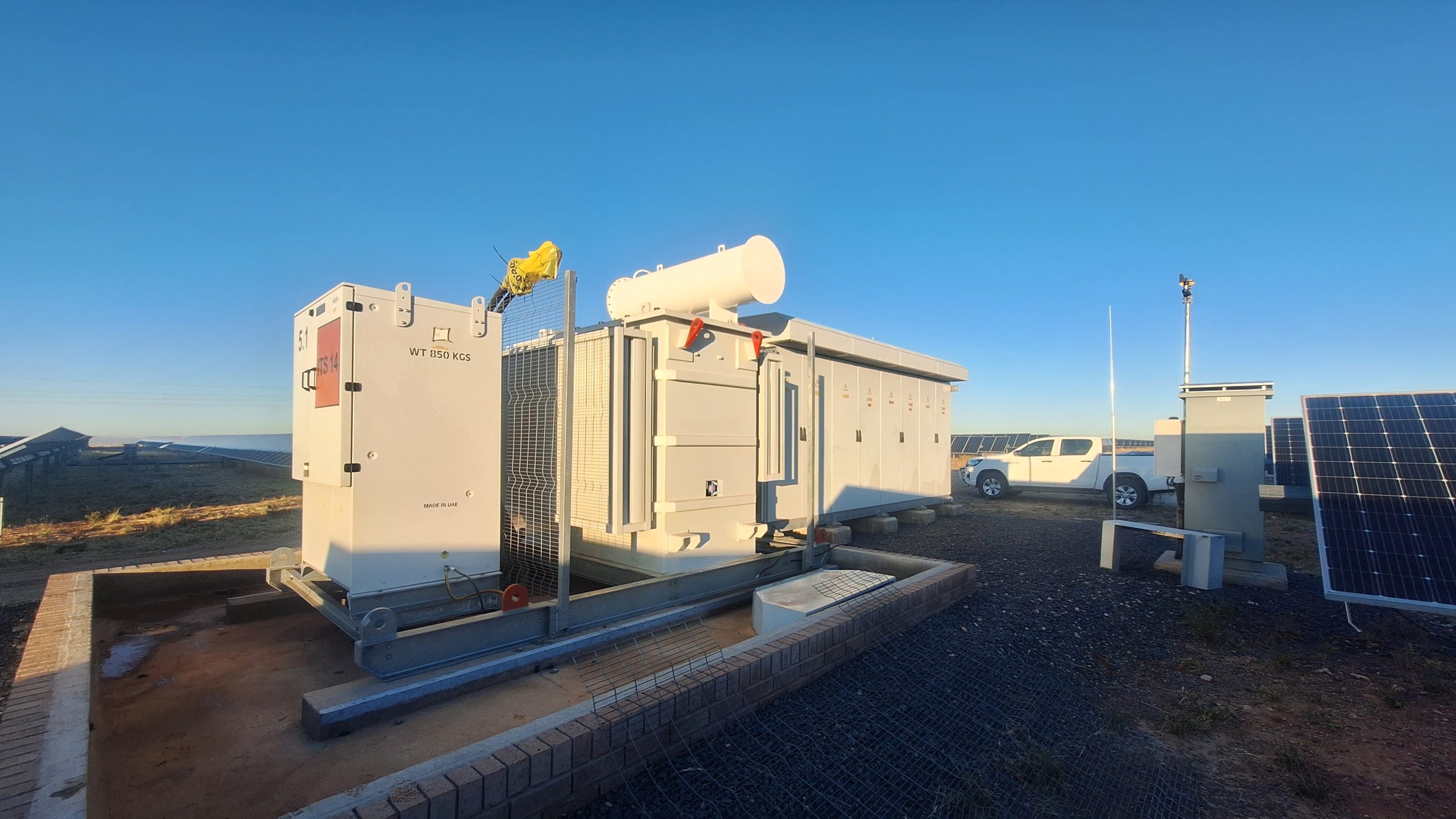
In the renewable energy sector, operational reliability and equipment longevity are paramount. A prominent renewable energy provider approached ArmCoil with escalating concerns regarding the performance of several 4700kVA 33,000/660V transformers deployed across one of their photovoltaic (PV) sites.
The transformers in question were not manufactured by ArmCoil. Despite being relatively new, these units began to show significant signs of operational degradation, most notably gassing within the dielectric oil—an indication of internal faults, thermal stress, or partial discharge activity. If left unresolved, these issues could lead to unplanned outages, equipment failure, and substantial downtime-related costs.
In response, the customer sent several of the underperforming and failed units to ArmCoil’s facility for thorough diagnostics and root cause analysis. What began as a repair request soon evolved into a comprehensive engineering project, driven by the need for deeper performance optimization and design correction.
Root Cause & Engineering Assessment
Upon disassembly and inspection of the transformer cores and windings, ArmCoil’s engineering team identified fundamental design inadequacies in the original manufacturing. The winding configurations, cooling mechanisms, and insulation systems were not well matched to the site’s load characteristics and thermal environment.
Key issues included:
- Insufficient thermal margins in the winding design, causing overheating
- Suboptimal oil circulation, impairing heat dissipation
- Excessive localized electrical stresses, potentially contributing to partial discharge
- Mechanical vulnerabilities, particularly during transport and installation
- The original design incorporated an oval-shaped core, which is not recommended for solar transformers. Oval cores cause efficiency losses and create localized heating hotspots—especially problematic in hot climates—accelerating aging and oil breakdown leading to gassing and premature failure.
The original design was evidently not tailored for the high ambient temperatures and fluctuating load profiles typical of PV power stations, rendering the transformers unsuitable for long-term deployment under actual operating conditions.
ArmCoil’s Engineering Response
Rather than merely repairing the units to their original specifications, ArmCoil initiated a complete redesign of the active parts—the core, windings, insulation system, and internal bracing.
The objectives were to:
- Improve thermal performance
- Reduce no-load and load losses
- Enhance dielectric strength and insulation longevity
- Ensure mechanical robustness during transport and handling
- Achieve magnetic balance between the three LV windings
- Upgrade winding materials from aluminium to copper
- Redesign LV windings from aluminium foil to disc copper conductors, thereby increasing cooling efficiency
- Fit precisely within the constraints of the existing tank design
To validate the redesigned transformer’s performance, ArmCoil commissioned an independent third-party electrical engineer to review the design documentation and inspect a completed unit. The expert confirmed that the new design exceeded the original performance specifications, both electrically and mechanically.
Execution & Delivery
With the new active unit design finalized and validated, ArmCoil proceeded to:
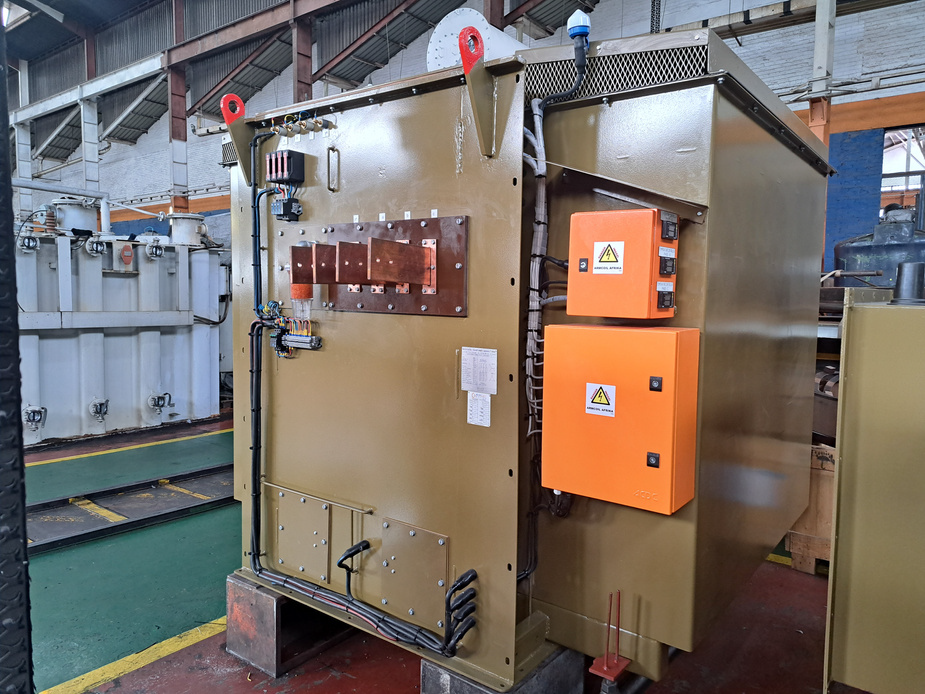
- Rewind and upgrade 7 existing transformers, retrofitting them with the new internals while reusing original tanks
- Manufacture 3 brand-new transformers built entirely to the improved specification
All units underwent ArmCoil’s rigorous factory acceptance testing (FAT), including:
- Insulation resistance tests
- Turns ratio verification
- No-load and load loss measurements
- Partial discharge detection (note: PD detection was not performed on the original units)
- Pressure and vacuum tests on tanks
- Thermal imaging under simulated load
- Dielectric testing (induced voltage and separate source)
The transformers were delivered and reinstalled onsite in accordance with international standards and under ArmCoil’s field engineering supervision.
Challenges & Solutions
- Design Constraints
Reusing the existing tanks imposed strict dimensional constraints. ArmCoil’s team had to:
- Design a new active part fitting precisely within tank volume
- Maintain required electrical and mechanical clearances
- Ensure oil flow and cooling efficiency was not impeded by tank geometry
Precision engineering and modelling were critical for ensuring compatibility without performance compromise.
- Integrity During Handling
Site inspections and transport revealed the conservator pipe assembly was under strain due to insufficient structural support during offloading. ArmCoil developed and implemented a new bracing protocol with custom steel reinforcements to eliminate pipe flexing and protect vulnerable components during transit.
Additionally, low-voltage (LV) bushings were sourced from Europe to meet the upgraded design requirements.
Results
The upgraded transformers have been in service over an extended period with no recurrence of gassing, overheating, or insulation breakdown. Performance remains stable under varied loads, confirming the success of the redesign.
Customer feedback has been resoundingly positive, with the engineering and operations teams reporting high reliability, minimal maintenance requirements, and confidence in the long-term viability of the upgraded fleet.
Conclusion
This project demonstrates ArmCoil’s deep technical capability in both transformer diagnostics and high-performance design engineering. By going beyond conventional repair and delivering a tailored solution aligned with site-specific demands, ArmCoil not only solved the immediate performance issues but also delivered long-term value to the customer.
This case stands as a testament to the impact of innovation, design excellence, and collaborative problem-solving to enable success in the renewable energy sector.